
Guest Blog: Making Progress Visible in Primary Languages
October 5, 2026
Written by Kate Percival, Primary Languages Consultant at Primary Languages Network
For me, sharing the successes of primary language learning makes it all worthwhile. Whether that be a confident word or sentence spoken aloud by a pupil, a display of target language written work or a leap of real progress on a data tracker, success comes in many shapes and sizes.
But what does real progress look like in language learning? How does learning build over time at KS2? And what is the role of clear objectives and assessment in recognising that progress?
National guidance
According to the DfE KS2 Programme of Study for languages, pupils have four years during KS2 to make ‘substantial progress in one language’. There should be an ‘appropriate balance of spoken and written language’ and it should ‘lay foundations for further foreign language teaching at Key Stage 3’.
According to Ofsted, pupils should make progress across all four skills or ‘modalities’ of language learning: listening, speaking, reading and writing. And this progress should be made via the three ‘pillars of progression’ namely vocabulary, grammar and phonics.
Although there is no formal requirement to assess in languages (as there isn’t in any foundation subject), at PLN we believe assessment can provide a fully rounded picture of a child’s attainment and progress across the curriculum rather than just in English and Maths. We encourage subject leaders to implement a system of tracking and assessing progress which works within the specific context of their school. This allows middle leaders to celebrate their subject’s strengths and work on areas for improvement.
Start with your shared vision
 Source: Primary Languages Network
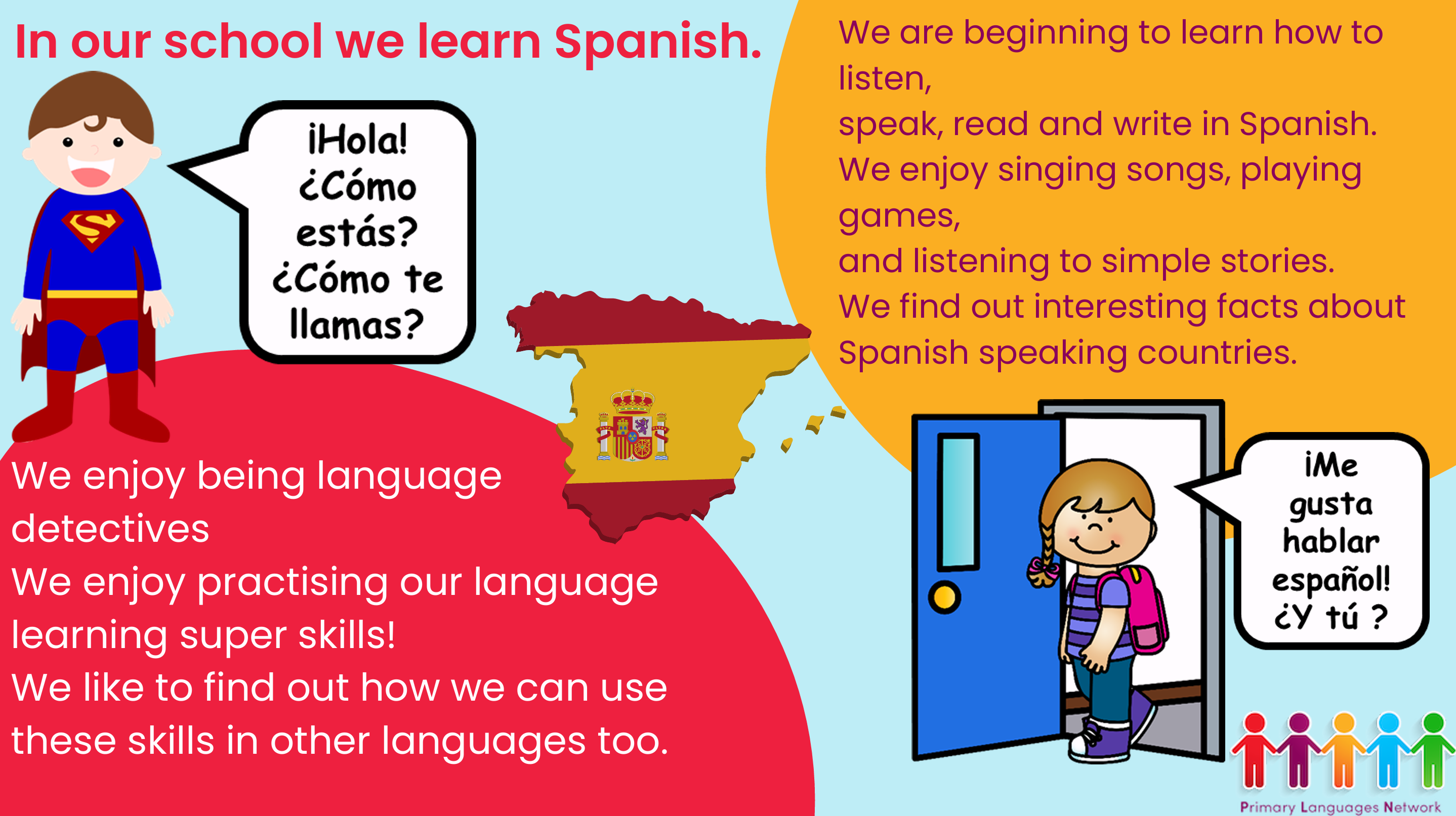
What is your vision for languages within your school? After all, progress in a subject follows when both staff delivering and pupils learning feel passion for the subject and feel comfortable and confident teaching and learning it. Clear steps of progression in vocabulary, grammar and phonics should be understood by everyone teaching languages in your school. Progress should then come as a natural part of the teaching and learning taking place in a well-sequenced and well-delivered scheme of work.
But what exactly is ‘substantial progress’?
This may look very different from school to school and there are a number of factors which will affect this: how much teaching time is dedicated to languages? Is it protected time so that there is consistency on a regular basis, lessening the time to forget in between sessions? Is the scheme well-sequenced in terms of content, grammar and phonics? What is the teacher buy-in like? Is the school ‘invested’ in primary languages?
Having a clear view of how language content and skills build over time can help teachers recognise that progression. In a recent PLN CPD session, attendees were given scenarios to order in terms of most to least progress made. It was unanimously agreed that when teaching is consistently delivered with opportunities to re-visit the learning between lessons, teachers feel confident about what progress looks like and are able to use teacher agency to formatively assess. With SLT support and a whole-school positive approach to language learning, this will undoubtedly allow the best chance of progress being made. From here, coordinators have to define their own version of ‘substantial progress’ being both ambitious yet realistic in terms of their school’s context. However, all versions of progress are just as valid.
What do I need to show progress of?
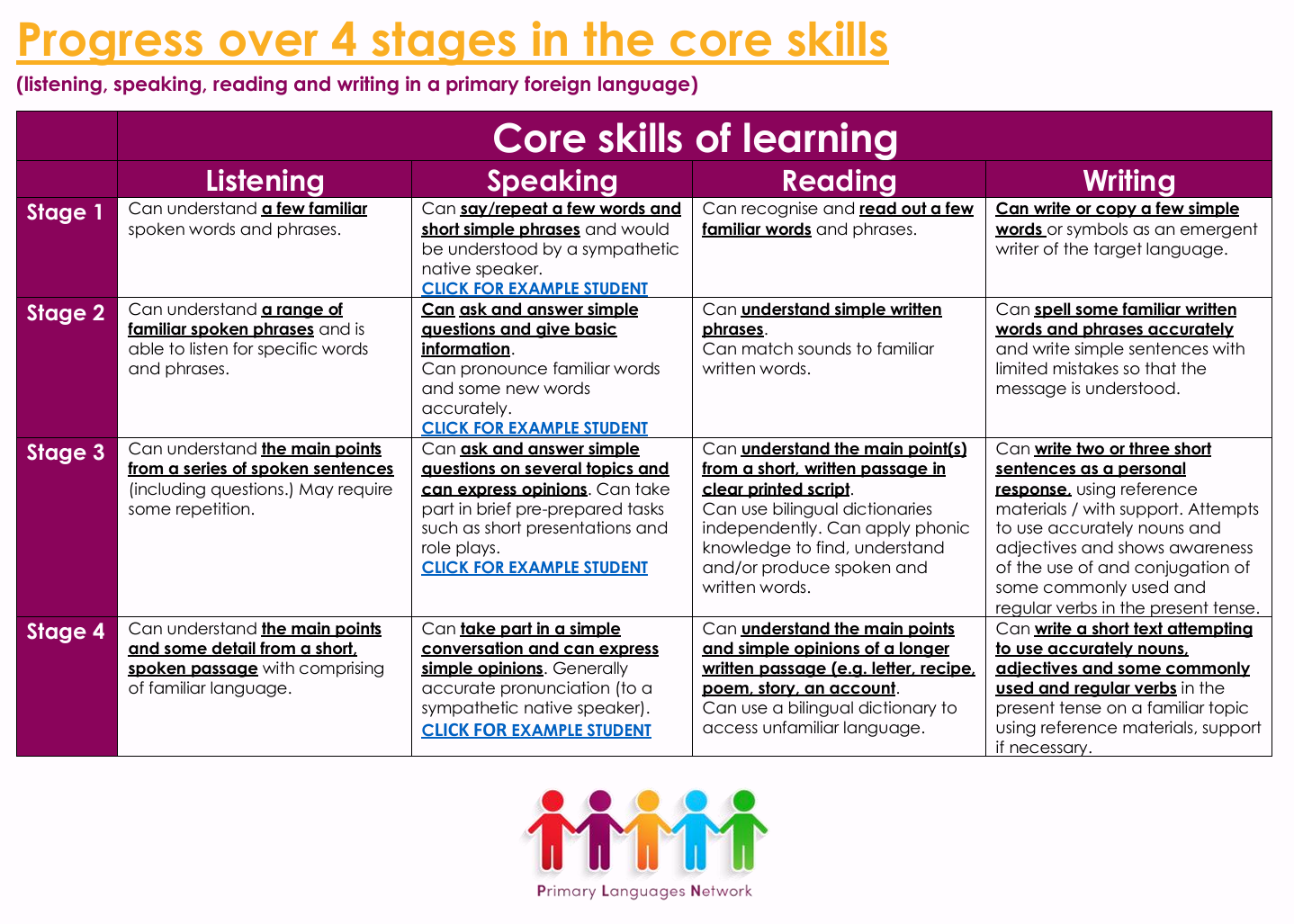
The DfE does not break down expected progress over four years, on purpose perhaps, so as not to be overly prescriptive. Instead, we are given 12 attainment targets which describe end points in the four skills of listening, speaking, reading and writing by the end of KS2. Primary Languages Network has its own chart; the Core Skills Progress document, written in line with level A1 of the Common European Framework of Reference (CEFR) for Languages which is an internationally recognised measure of competency. This chart simply documents what an age-related child might be able to do at the end of a particular stage of learning in all four skills. So many schools find this document useful, particularly the video examples of speaking which are accessible by clicking on the links within the document on the PLN digital platform.
 Source: Primary Languages Network
Teacher Assessment
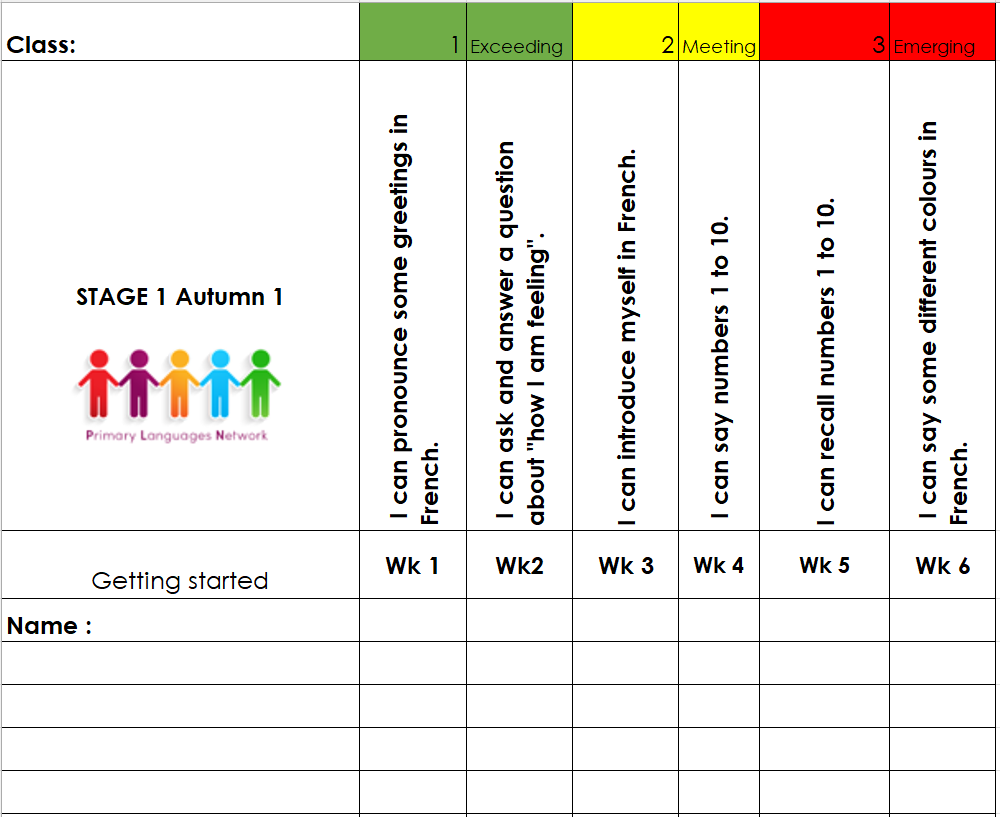
Once teachers are secure in their understanding of progress, they will feel confident formatively assessing on the go in every lesson they teach. In fact, in our whole-school introductory sessions to the PLN scheme, we train all teachers to do just this. The kinds of games and activities built into the PLN scheme allow teachers to gauge understanding and progress made across a unit. This individual knowledge of the children accompanied by evidence of the four skills (written work, recordings etc) bolster a teacher’s judgement to be able to provide an outcome by the end of the unit. If you choose to track coverage and progress, what does that look like in your school? Do they have any documentation which is straightforward to complete and builds up a picture over time?
 Source: Primary Languages Network
 Source: Insight
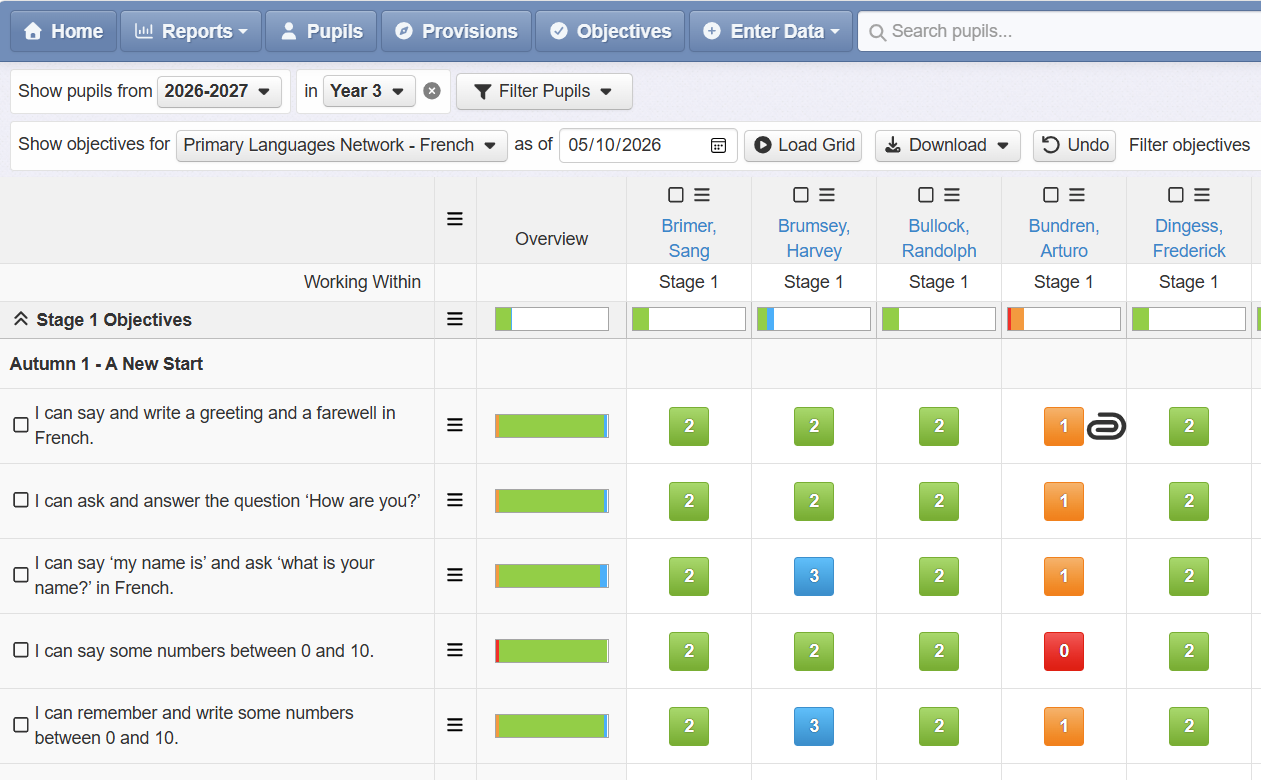
For schools using both Primary Languages Network and Insight, PLN’s French, Spanish and German assessment objectives are available directly within Insight. This gives schools the flexibility to record assessments against PLN’s objectives and build up a picture of progress over time.
For example, most pupils may understand and be able to recall the names of animals, but they might struggle to form the plural versions of the nouns. Your class may show confidence with the reading objectives but still need extra practice in listening.
What about summative assessment?
 Source: Primary Languages Network
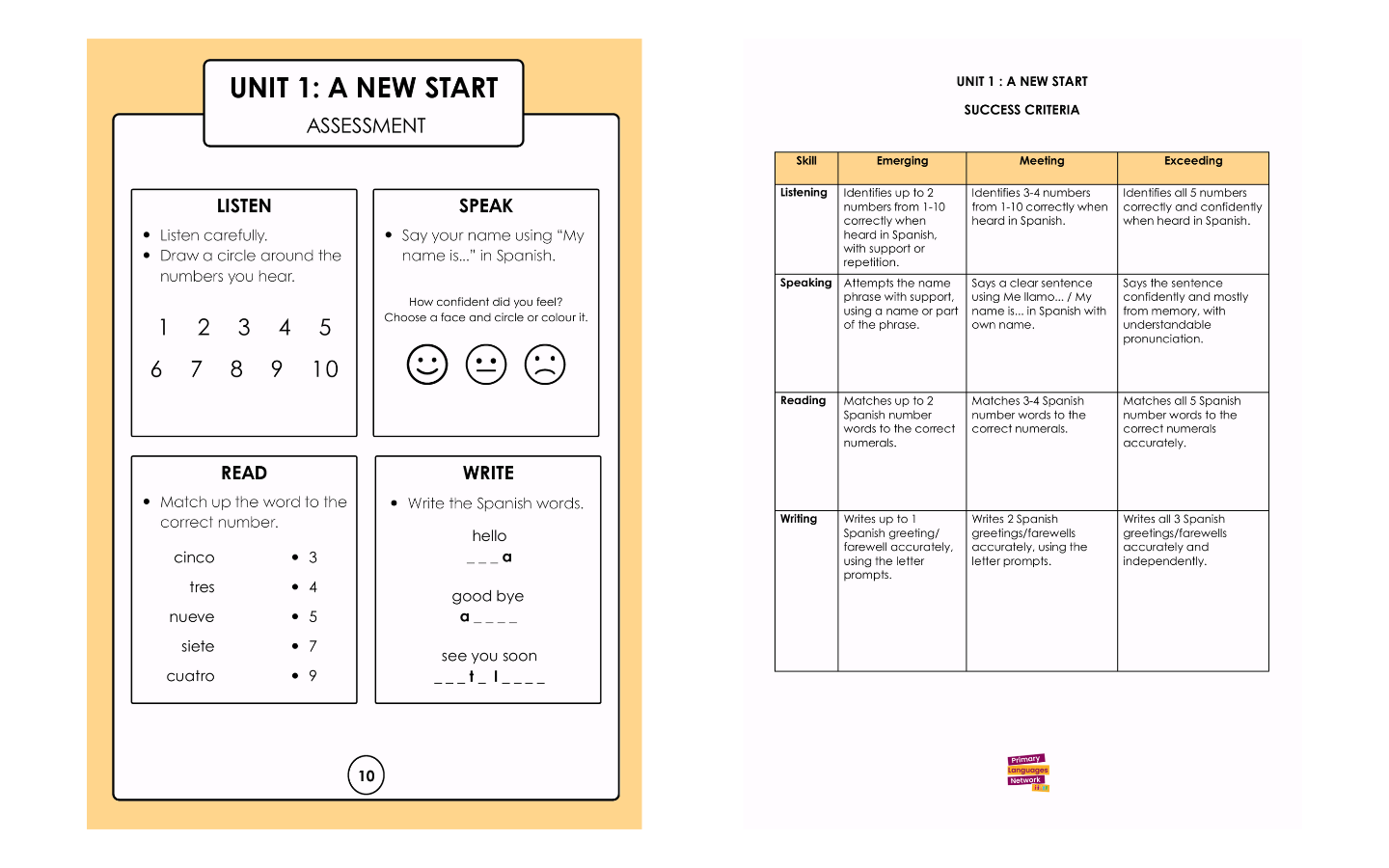
One way of doing this is to do a half-termly or termly summative assessment such as PLN’s Puzzle It Out. Accompanied by a teacher guide, these quizzes test pupils’ understanding of the content and skills of each unit and can be done in a single session. They can efficiently generate an outcome for each child namely ‘emerging,’ ‘meeting’ or ‘exceeding’ but these need to be viewed in the context of day-to-day learning. They are fantastic as a snapshot of achievement at a moment of time, but we always advise that they are coupled with ongoing weekly teacher assessment to give the most realistic overview of what each child is able to do.
I definitely believe that with the support from both Primary Languages Network and Insight, schools have the guidance yet flexibility to make tracking and assessment work for them in an efficient and impactful way.
If you’re interested to hear more about tracking and assessing in primary languages, get in touch with me at [email protected].
About our partnership
Primary Languages Network is an Insight partner, with its French, Spanish and German assessment objectives available within Insight. This article was written by Kate Percival, Primary Languages Consultant at PLN, as part of our Partner Blog series. The views and advice shared are those of the author.
Get in touch
Insight offers a 60-day, no obligation, free trial. This includes a fully featured system and full support to help you get started. Import your pupils, historic data, and evaluate the system with your team.